

Blogs

Is a Split Keyboard Good for Travel and Hybrid Work?
A practical guide to when a portable split keyboard makes sense for travel and hybrid work, the trade-offs it brings, and where Elytra fits.
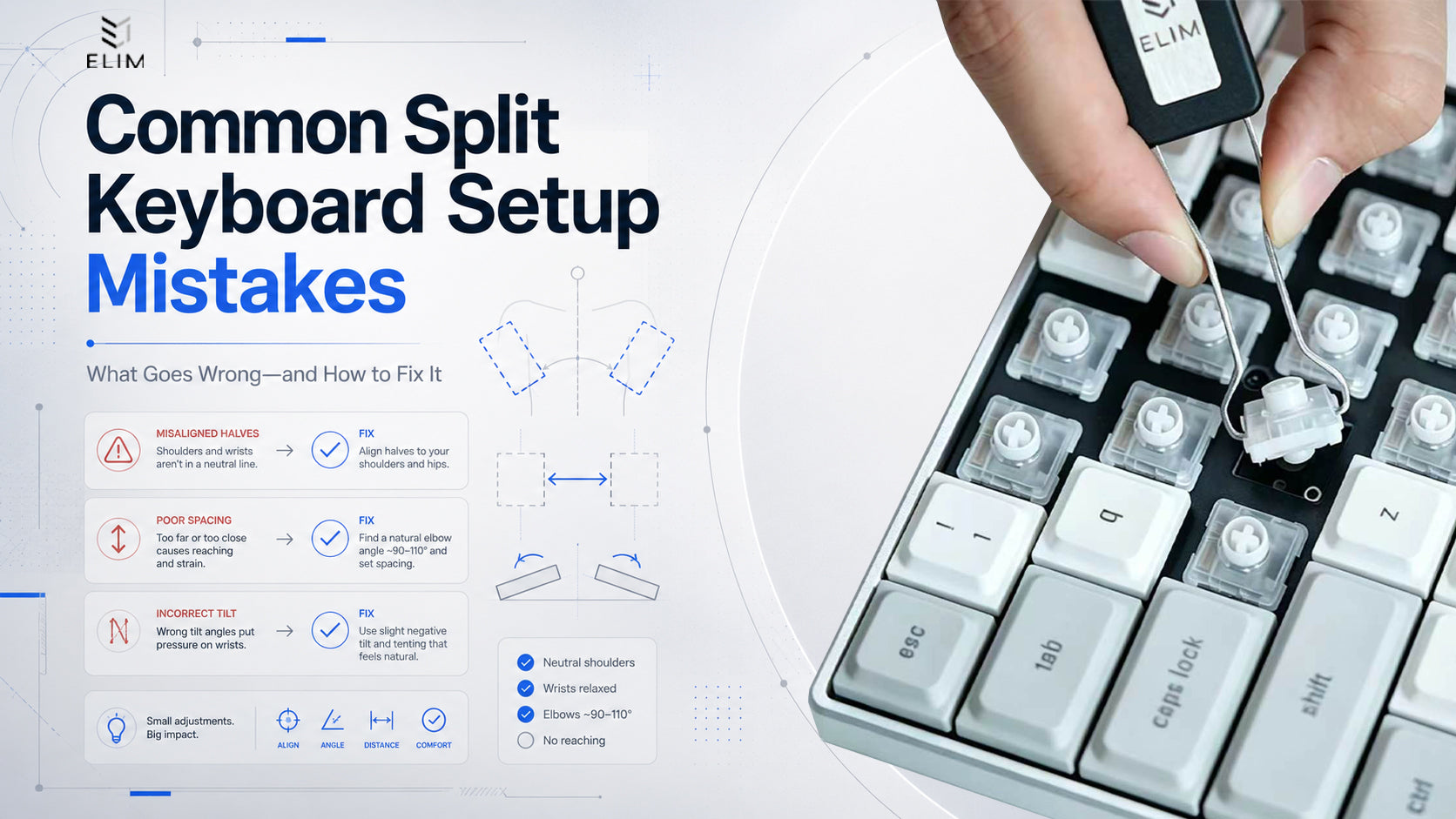
Common Split Keyboard Setup Mistakes and How to Fix Them
A practical guide to split keyboard setup mistakes, from spacing and mouse reach to keymap changes, Bluetooth habits, charging, and travel protection.
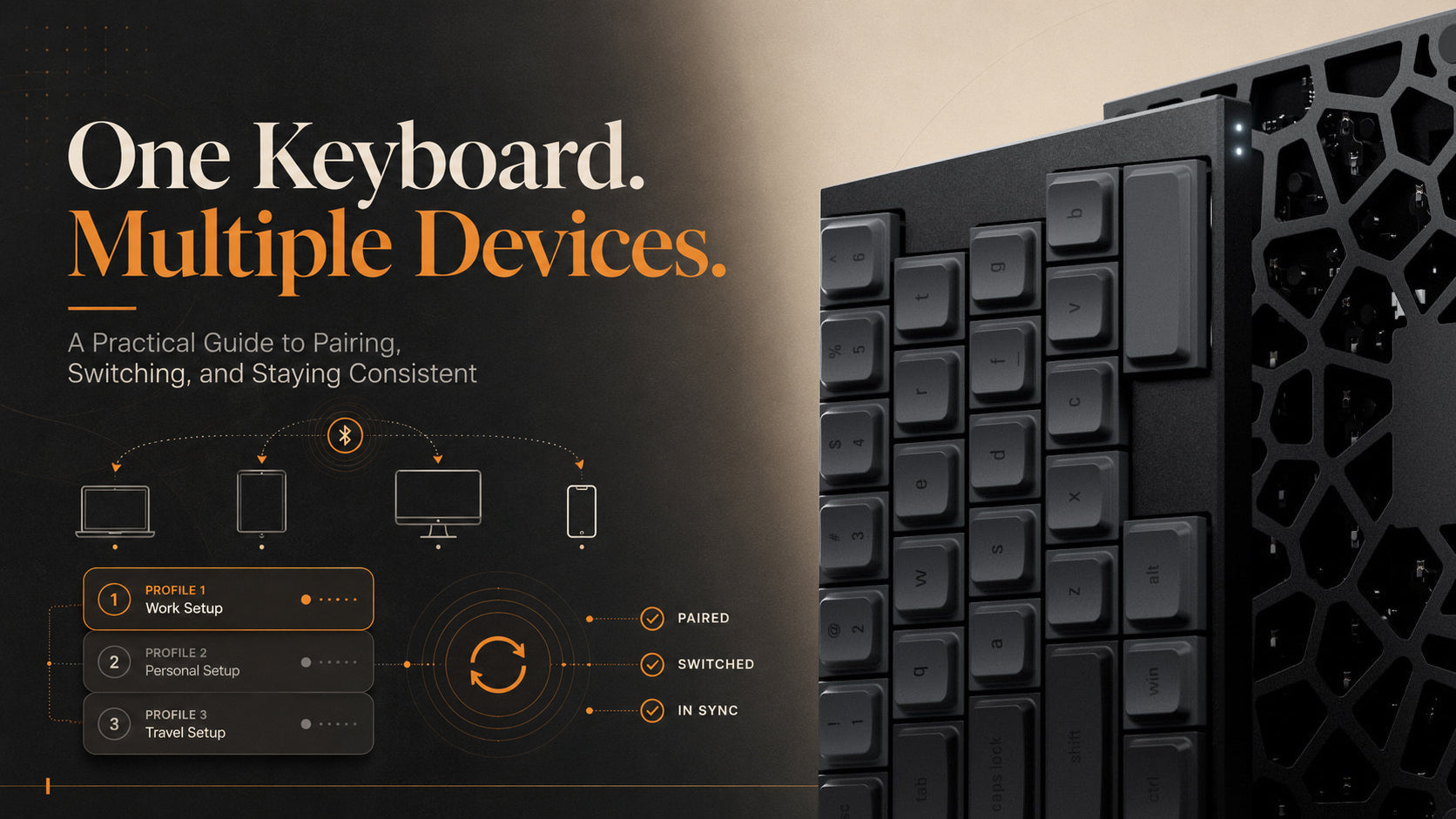
How to Use One Split Keyboard Across Multiple Devices
Set up Elytra across a laptop, desktop, tablet, and phone with fixed Bluetooth profiles, one shared keymap, repeatable charging, and a consistent desk layout.
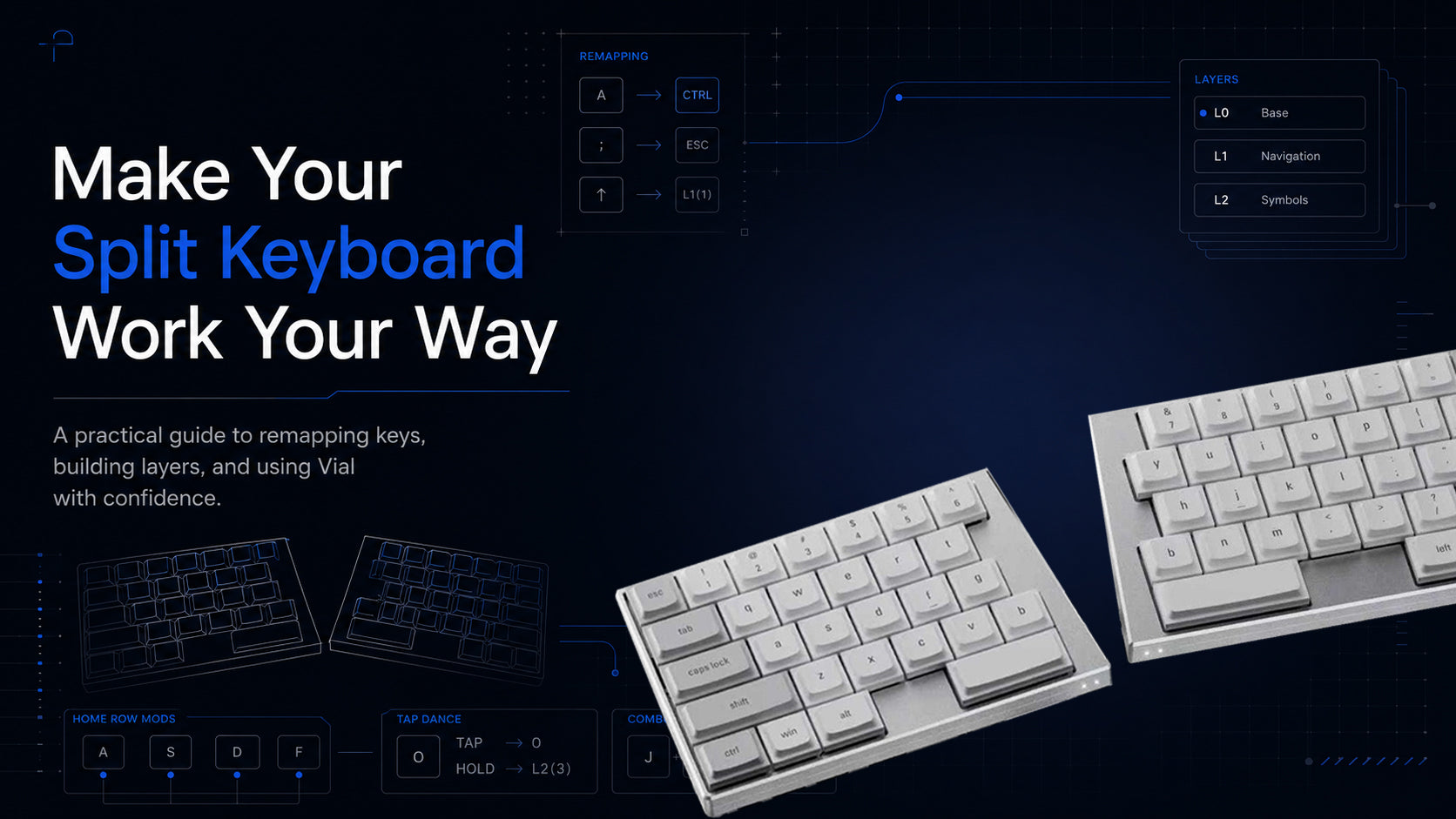
How to Remap a Split Keyboard with Vial
Learn a practical way to remap a split keyboard with Vial: keep the base layer familiar, change one problem key at a time, and add layers, macros, or combos only when they help.
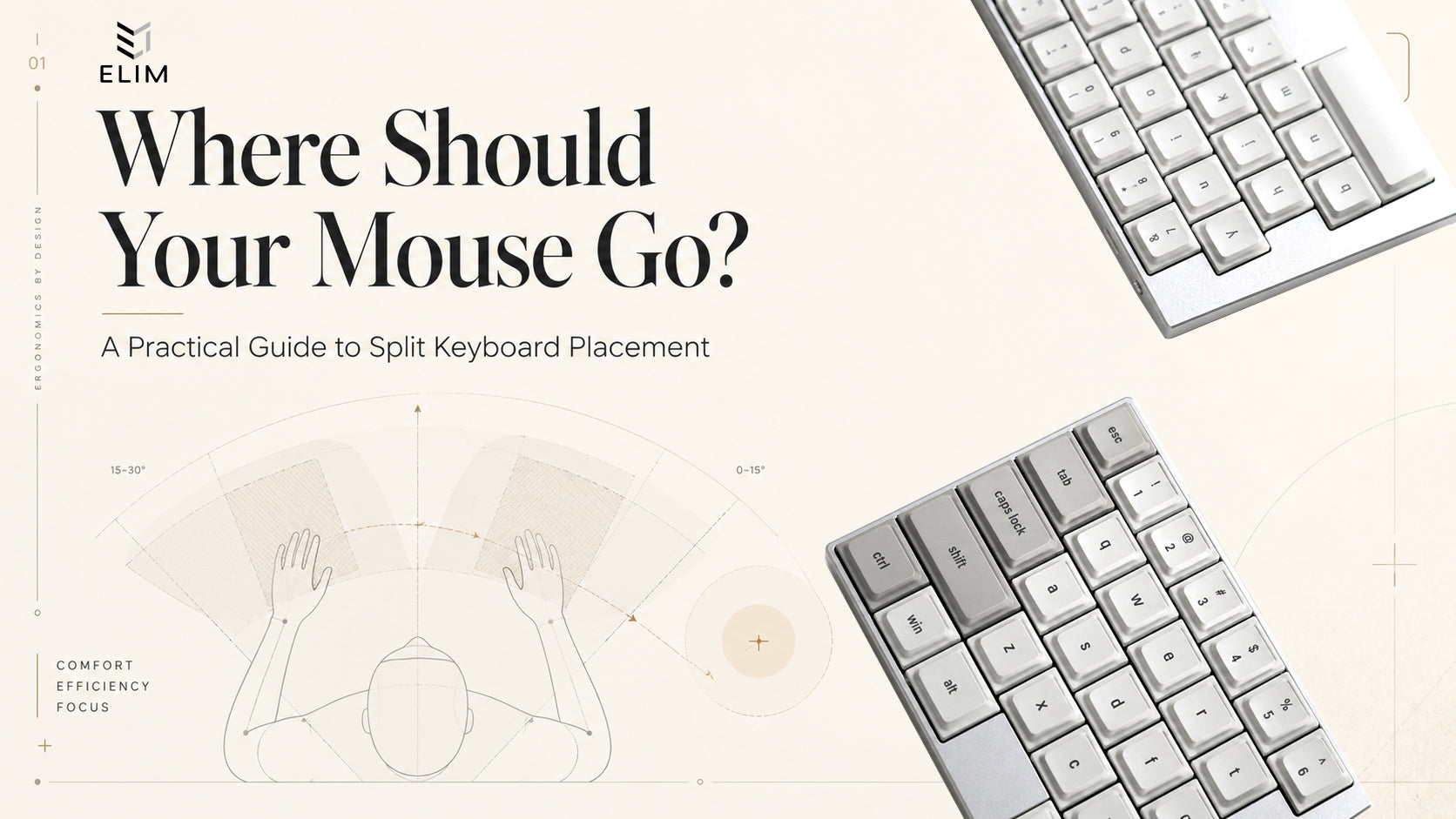
Where Should You Put Your Mouse with a Split Keyboard?
Mouse placement can make or break a split-keyboard setup. Explore practical layouts for a mouse, trackpad, or trackball, and learn how to keep each device within easy reach.
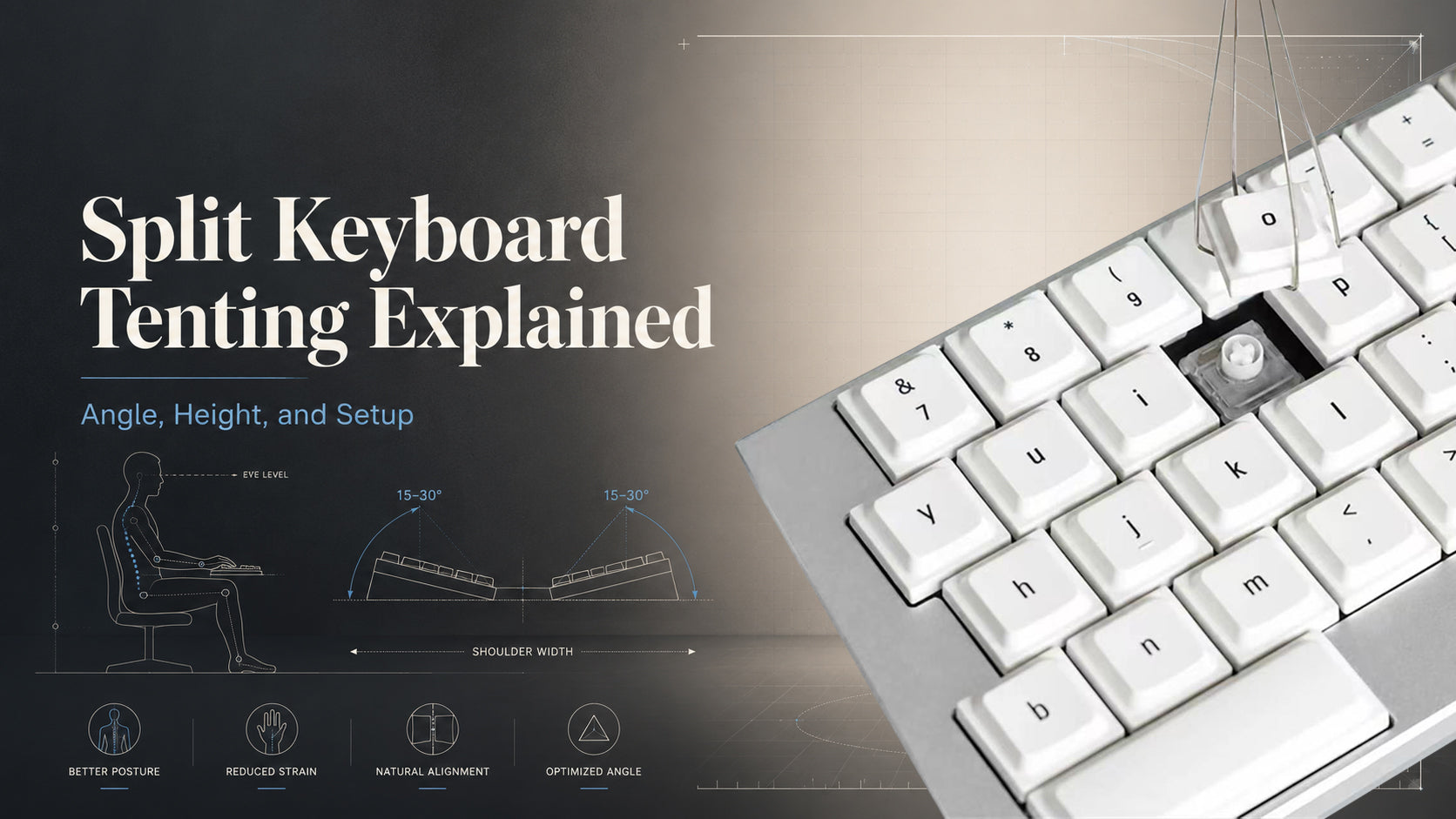
Split Keyboard Tenting Explained: Angle, Height, and Setup
Learn how split keyboard tenting changes angle, typing height, and desk setup. A practical Elytra guide to spacing, splay, palm supports, and gradual adjustment.
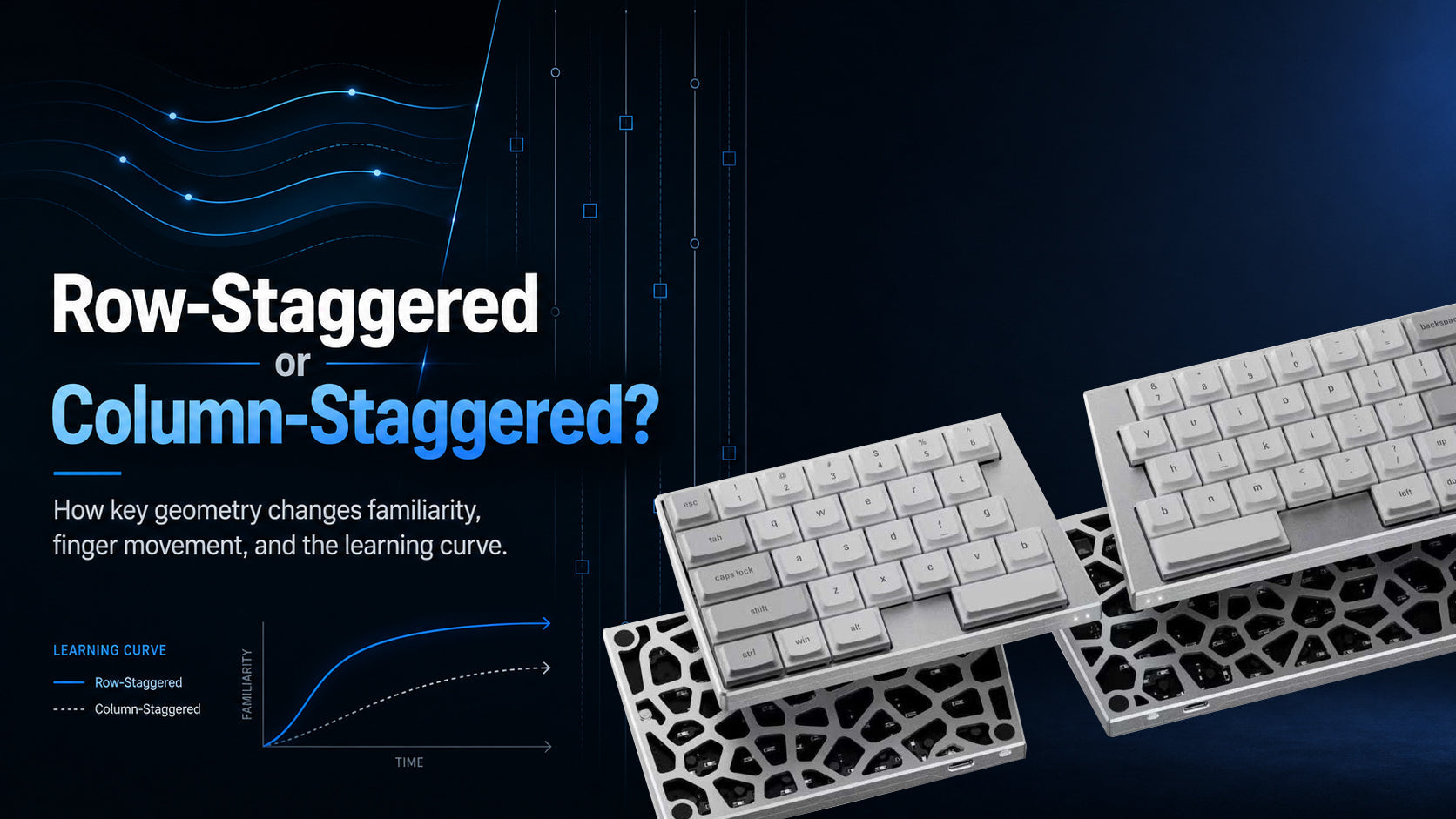
Row-Staggered vs Column-Staggered Split Keyboards: Which Layout Should You Choose?
Compare row-staggered and column-staggered split keyboards. Learn how key geometry changes familiarity, adaptation, hand placement, and daily use with ElimKeys Elytra.
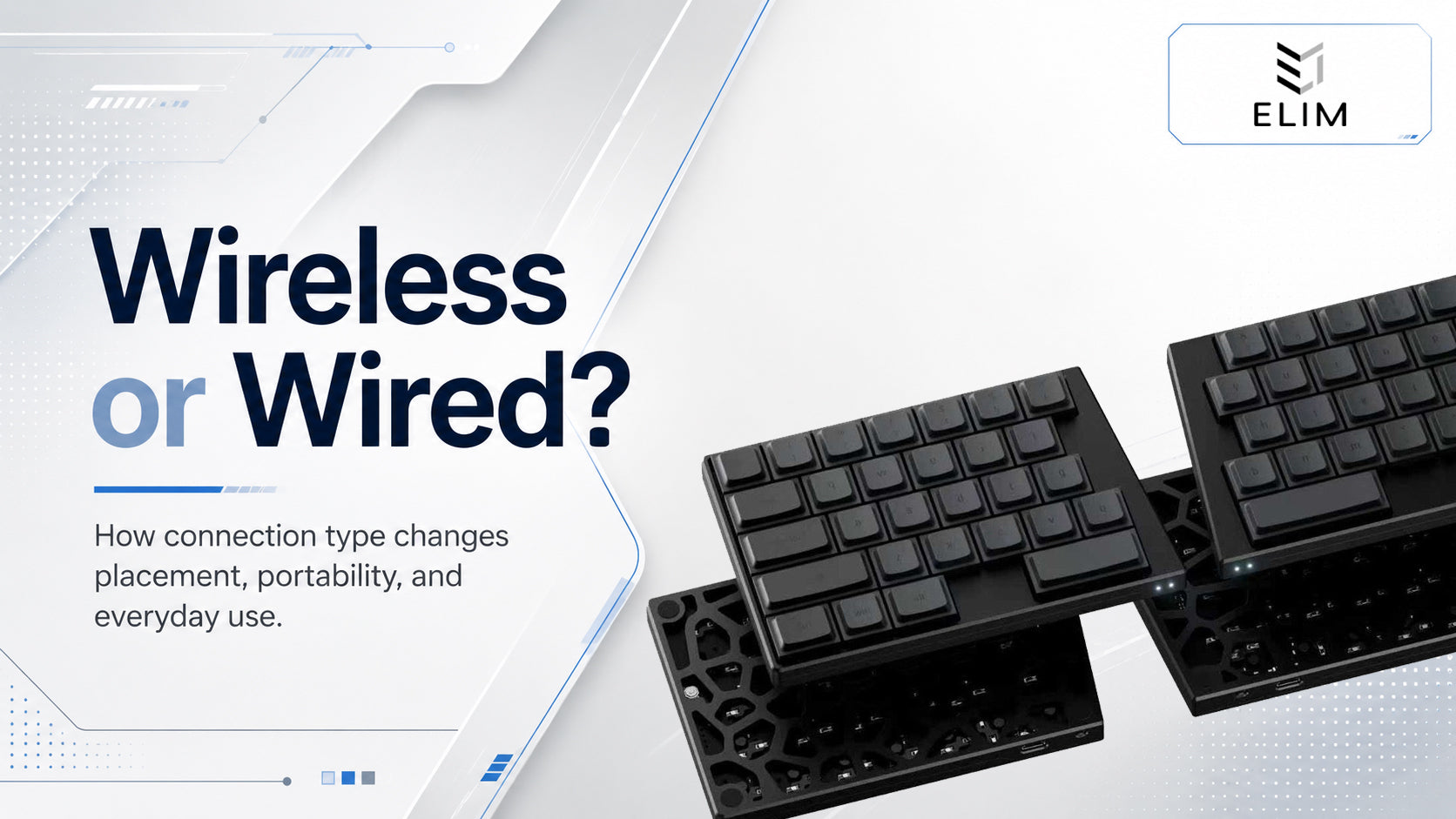
Wireless vs Wired Split Keyboards: Which Is Better for Your Setup?
Compare fully wireless, hybrid USB, and fully wired split keyboards. See how connection type changes placement, portability, and everyday use with ElimKeys Elytra.
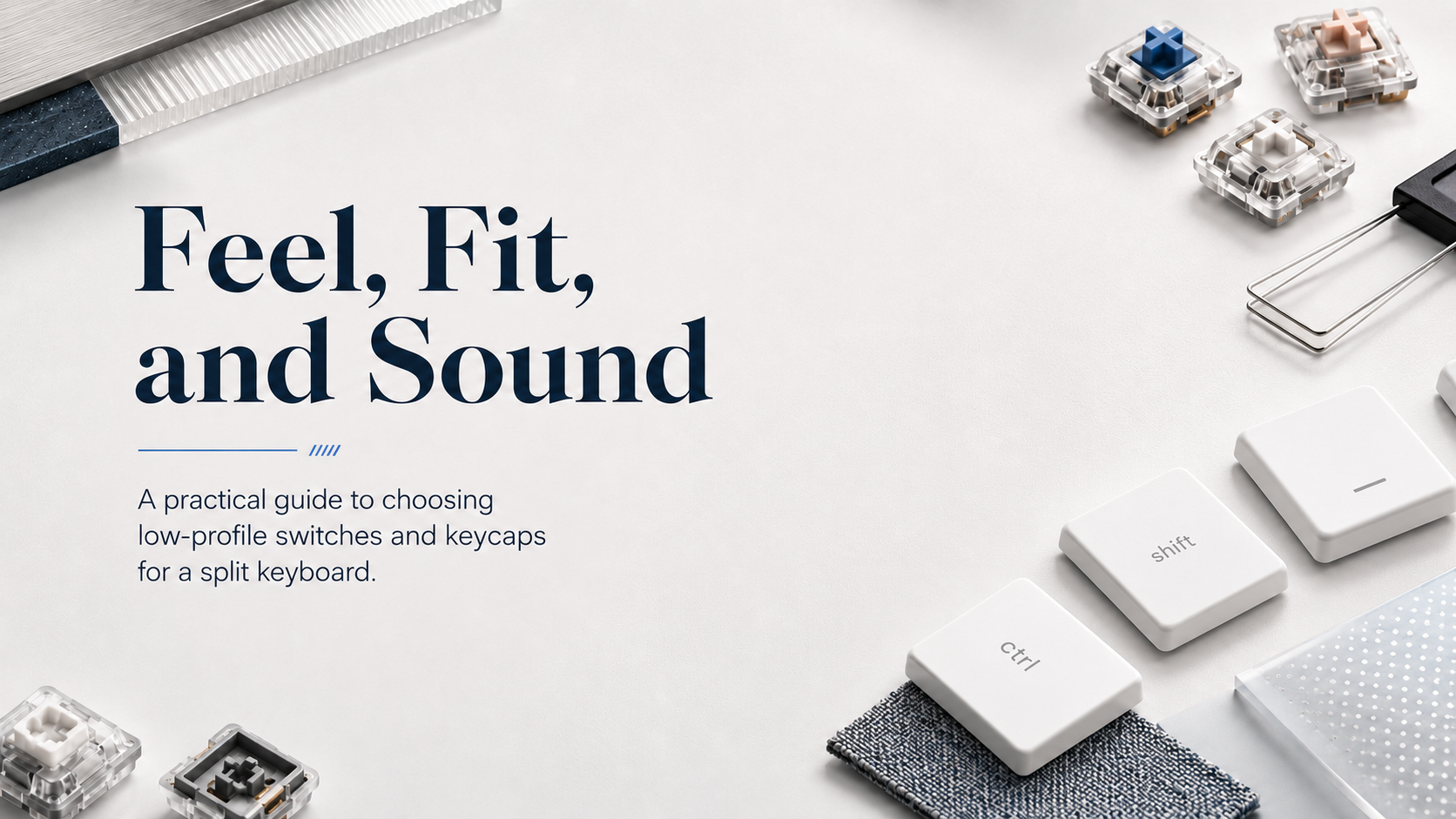
How to Choose Low-Profile Switches and Keycaps for a Split Keyboard
A practical guide to feel, sound, compatibility, and daily use, with ElimKeys Elytra as the example.